Royal Canin Recycling Programme VetSouth

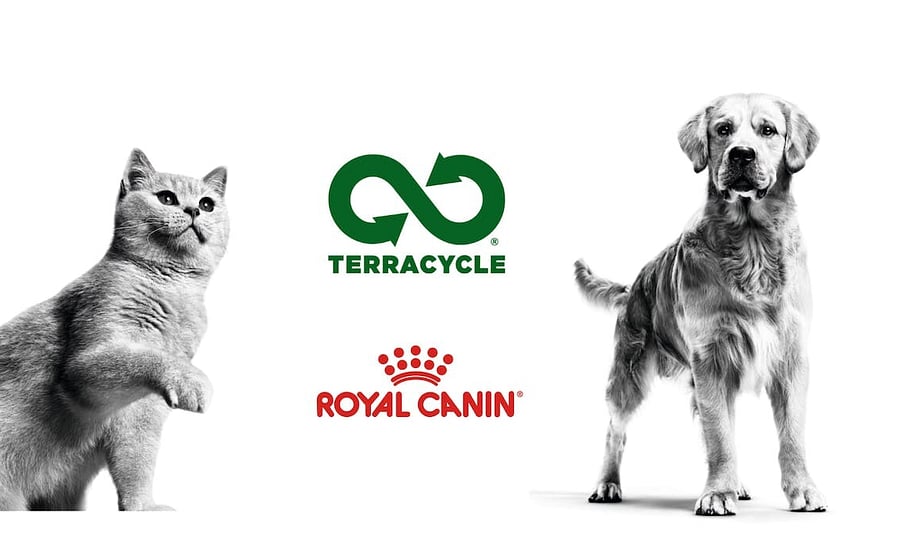
VetSouth are proud to be part of the Royal Canin Recycling Programme, providing pet food recycling options in Gore, Invercargill and Winton. Pet owners can return your clean and empty cat and dog dry food and wet food pouches to your nearest VetSouth clinic. Royal Canin works behind the scenes with TerraCycle to recycle these products, using a circular economy method, turning them into reusable items.
What products can be recycled?

Royal Canin Recycling Programme accepts all brands of clean, dry pet food bags and wet pet food pouches.
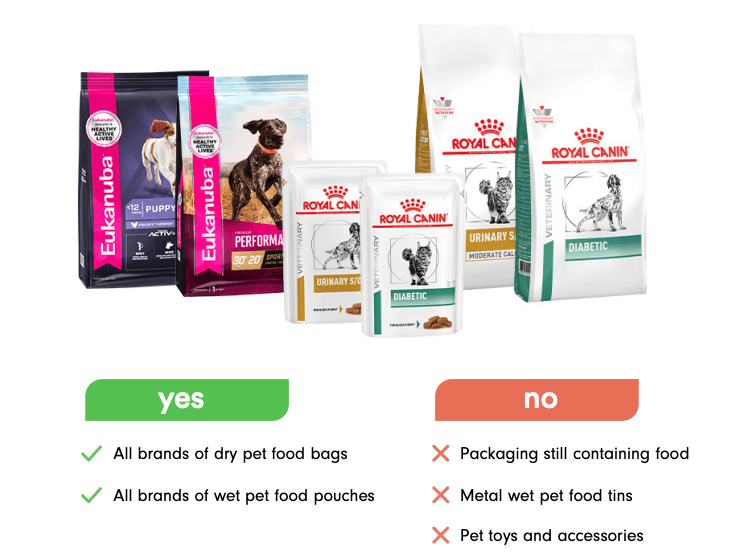
Cans and boxes can be recycled in your own kerbside recycling. These are not accepted in the bins.

Where and when can I drop off my pet food packaging?

You can drop off your pet food packaging at our Gore, Invercargill or Winton clinics during opening hours. Find your nearest clinic here.

Does this cost anything?

No, this is free for pet owners.

Who is TerraCycle?

TerraCycle is an innovative, global waste management company that currently operates across 21 countries worldwide. Partnering with leading brands such as ROYAL CANIN®, TerraCycle helps to recycle products and packaging that would otherwise end up in landfill or be incinerated.

To find out more, visit: www.terracycle.com

FURTHER READING

Latest news
Ionophore toxicity risks for dogs

Ionophore coccidiostats are a class of compounds commonly used in livestock feeds, particularly calf rearing meals, to improve growth rates and prevent certain diseases such as coccidiosis. DogsRead more

Learning from lamb losses – the value of post-mortems

Often, this is put down to the storm that inevitably comes through in the middle of lambing every year, but are there other areas where we have some more control over this wastage? By performing simRead more

Dental care, alpaca style

Not something our vets see every day; our South Otago team polished up a herd of alpaca’s dental health! Just like many other species, dentals are an important aspect of routine care for alpacas. TRead more

Trace elements ahead of calving

While most dairy farmers have a trace element supplementation routine, as we reset for another season it’s worth asking: are you supplementing the right trace elements at the right time? Trace elemRead more

From data to decisions: Using wearables to guide transition management

During the 2025-26 season, one of VetSouth’s Southland dairy farms used data derived from their wearables and the CowSmart service to monitor transition performance, cow recovery, and reproductiveRead more

Give your calves a great start

Good care in the first few months sets calves up for strong growth, disease resistance, and long term performance. Give them the best start at birth by ensuring each calf gets a minimum of 10% ofRead more

Hill country tech

Kaizen – a Japanese philosphy focusing on continuous improvement – and a desire for efficiency is driving sheep and beef farmers Nick and Alexis Wadworth to embrace technology on their farm inRead more

Repro results round-up

The highlight of these events was sharing the strong reproductive results achieved by our farms this season. The average 3-week in-calf rate across all VetSouth farms was 50%, against an industry tarRead more

The case of a locked leg

I was recently on-farm for a routine visit, when the farmer mentioned that he had an odd lame cow that hadn’t yet responded to any treatment. When we looked at her, she was dramatically lame, withRead more

Are summer crops reducing worm burdens?

We’ve seen plenty of lamb fattening crops planted across Southland this season, often driven by the need for ‘cleaner’ feed with lower parasite contamination, increased feed value and aRead more

Pre-lambing management strategies

Lots of you will be scanning soon, which is an ideal time to check on your ewes’ condition and trace element status, and make a plan for spreading them out later in the season. Some of the mainRead more

All bark, sore bite!

These hard-working animals will often appear ‘normal’ despite having advanced disease processes. Working dogs are at risk of damage to the teeth, whether it be from working with livestock,Read more
 

This product has been added to your cart

CHECKOUT