Ewe wastage is an important consideration to running a profitable sheep farm.
I recently had a look at a study done on three large farms in the North Island, which showed 90% of hoggets left the flock from ewe wastage! That is, only 10% make it through to be cast for age.
The study considered ewe wastage to be any ewe that left the flock (died, or culled) before the age of six. The ewes that were culled were mostly dry, had udder issues, or poor health etc.
A big impact of this wastage is that more replacements are required, creating a younger flock that will have a lower ovulation rate and, therefore, scan lower than mixed aged ewes and ultimately impact overall flock performance.
This is where replacement rate comes in – an annual measure of how many hoggets are required as replacements (an indicator of ewe wastage). So, what is your replacement rate? What portion of your flock do you replace each year? Is this impacting your production? Are there ways to reduce your percentage required?
Here’s some data from our farmers:
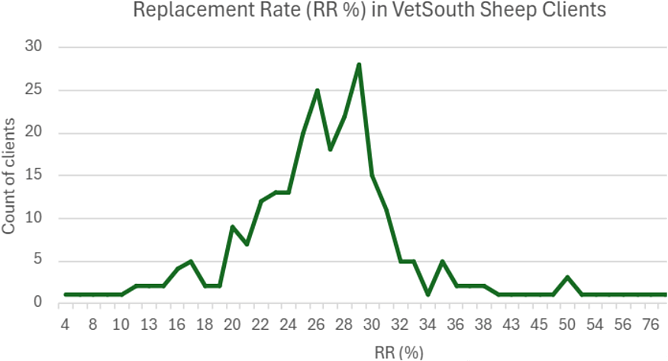
These figures have come from the stock numbers we collect during our annual consults and show that the majority of our clients sit between a 25-30% replacement rate (RR).
Having a lower RR will enable you to have more lambs for sale, the opportunity to put more ewes to a terminal ram, and less feed going to ‘non-productive’ stock.
The greatest predictor of ewe wastage is ewe body condition score (BCS) pre-tup. The better her BCS, the less likely she is to die, or be prematurely culled, before the next mating period.
If you would like to unpack this and work through improvements in your flock, get in touch with your KeyVet.