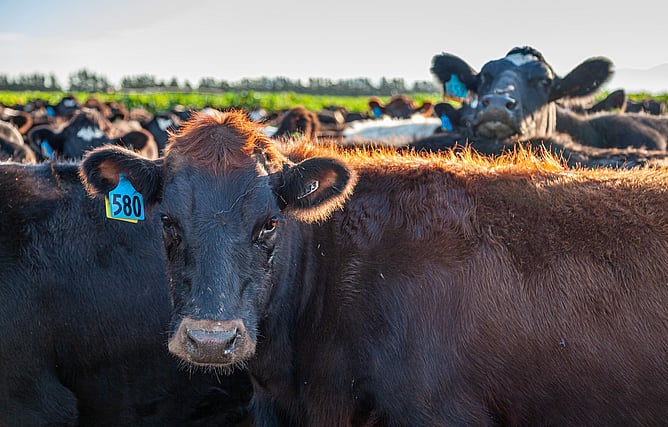
We’ve recently seen many cases of humerus fractures on local farms, a nasty condition that impacts heifers going through their first lactation.
The catastrophic fractures occur when bones become weakened by decreased bone mass and increased bone resorption. They are typically seen at two key times: in the seven days either side of calving, or during peak lactation.
An estimated 4,500 heifers are affected in NZ each year, and outbreaks can affect up to 10% of a single farm’s herd!
For a long time, copper deficiency was thought to be the main culprit. This was due to affected animals being found to have low levels and the important role coper plays in the synthesis of collagen, which gives strength to bones.
However, recent studies have suggested that low copper levels are likely a symptom of the condition, rather than the cause. When the bone collagen is depleted in weaker bones, copper from the liver is mobilised and utilised in the bones to help strengthen them, lowering stored levels.
So, what is actually causing the bone breakdown?
Calcium, phosphate and magnesium
Low calcium and high phosphorus diets have been proven to cause a reduction in bone mineral density.
The ideal dietary calcium to phosphate ratio (Ca:P) is around 1.5-2:1. In Southland, we have seen lots of farms switch from wintering on kale to wintering on fodder beet. Kale has a higher Ca:P ratio of around 3:1, whereas fodder beet is typically less than 1:1 and the bulb crop causes more soil ingestion (also phosphorus).
To make this balance even more difficult, New Zealand has seen an increase in the phosphorus levels in our soil over the last 20 years. Plus, PKE also has relatively high phosphorus levels, so excessive intake of PKE during late gestation or peak lactation isn’t advised for heifers.
Calcium is so important as a heifer’s demand for calcium increases dramatically when she reaches the end of her pregnancy and the start/peak of her lactation – especially for high producing girls! Dietary calcium needs to be around 1% during this period. If the dietary intake of calcium does not meet the demand of the heifer’s body, then there will be increased rates of bone resorption.
High magnesium levels can also have a negative effect on bone strength, as magnesium competes to bind with calcium and blocks important enzymes needed for bone remodelling. It’s a good idea to think about whether your farm differentiates between supplementing magnesium to heifers and to older cows, as providing too much magnesium to the younger stock could be having a detrimental effect.
Over the last few years, there has also been less clover in southern pastures (clover has three times more calcium than ryegrass does), more efficient magnesium supplementation through the use of dosatrons, and an overall trend to select for higher-producing heifers.
These factors all impact the increase in the number of fractured legs we are seeing in heifers each year.
So, what can you do to avoid this condition?
Reduce the risk to your heifers
Give your heifers gold standard copper supplementation, and consider getting us to test their stored copper levels.
Review your winter, springer and lactation diets for your heifers (ideally youngstock wouldn’t be on a DCAD diet). Do they need a calcium boost?
Check the types and quantities of magnesium your heifers are getting around high-risk periods.
If possible, switch to kale instead of fodder beet for your heifers.
Spontaneous humeral fractures can be a big issue for some farms over winter and spring, which has a huge impact on both animal and farmer welfare. If you want to discuss what changes could be implemented into your specific farming system to reduce the risk, you're welcome to give your KeyVet a call.