
Lambs born to well-fed ewes with a body condition score of 3 or more will have good reserves of brown fat. This provides readily available energy to fuel a newborn lamb before it absorbs milk.
However, sometimes these energy reserves can run out before the lamb gets its first feed. Once this happens, the lamb becomes cold and weak, and its chances of survival drop quickly.
One way to buy a little more time is to provide the lamb with an energy source it can use immediately – an intraabdominal dextrose injection.
IMPORTANT: give the energy before warming the lamb! This means there is energy available for the body to generate heat with. If you heat up the lamb first, this can quicken death.
A 20% solution of dextrose is needed. We can only get dextrose in 40% solutions, so you need to dilute it using a 50:50 mix with cooled boiled water.
You can do this in a small flask using warm water for best results. A lamb needs 10ml per kg of liveweight (that’s 30-50ml for most lambs).
First, spray the site with iodine. Then, using a clean, ¾ inch, 18G needle and 50ml syringe, insert the needle just on the head side of the navel, directing it towards the chest. You may feel a wee pop, that’s the needle going into the abdomen (as required).
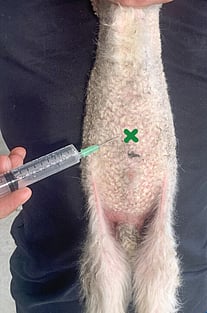
Once properly in place, inject the solution. If you see any swelling, you are not in far enough, so reposition the needle. Now, warm your lamb up, and go from there.
Not mothering up? You can still use this technique in the paddock when lambs are born late in the day and a rough night is predicted. Doing this and leaving them for Mum to look after can be very worthwhile.