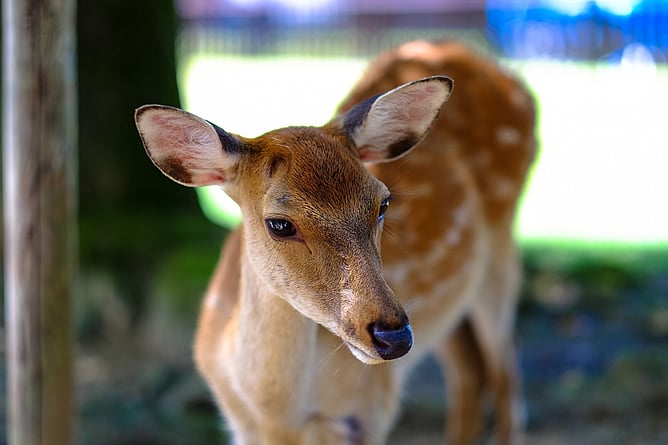
Hind nutrition and body condition, along with the environment of the fawning paddocks, are the important determinates in the success of fawning.
The target body condition score (BCS) of hinds throughout pregnancy and into fawning is 3.5. A BCS of 3 is moderate and 4 is good. Hinds should not be fat (greater than BCS 4.5) at fawning, as this will increase the risk of dystocia (fawning difficulty).
Conversely, hinds that are thin at calving (less than BCS 2.5) may fail to rear a fawn or even survive. They certainly will not produce the quality of colostrum and quantity of milk required to maximise the growth potential of their fawns.
Building condition before fawning
Any hinds identified as thin in the spring can be lifted by preferential feeding during a six-week window in September through to about mid-October. A 120kg Mixed-Age Red hind will need close to 3kg DM of medium-high quality pasture to be fed optimally. She will require these six weeks of preferential feeding to put on 1 BCS therefore keeping hinds at minimum BCS of 2.5 is required to be 3.5 at fawning.
Hinds will not put on any condition in the last month of pregnancy. The feed cost to put on condition is about 2-3 times that of maintaining condition therefore animal performance aside, it is usually more economic to supplement feed at times of shortage. Typically, providing enough pasture of good quality during the summer to maximise milk production, maintain hind condition and meet the fawns’ increasing requirements is challenging.
Nutrition can influence fawning date
The effect of nutrition has a unique effect on gestation length for a farmed animal. Hinds will delay fawning, resulting in a longer gestation period if feed is restricted or they are in low BCS. Conversely, they will fawn earlier, resulting in a shorter gestation period if they are in good BCS and feed is plentiful.
This effect takes on real economic significance with a return to the peak-schedule, chilled season, where producing heavier weaners earlier means more money.
AgResearch has undertaken significant deer nutrition, reproduction and venison production research in New Zealand and provides strong scientific credibility.
Preparing fawning paddocks
Fawns will start being born from about the last week of October. Hinds should be set-stocked onto fawning paddocks at least two weeks prior to this to familiarise themselves with the paddock and be comfortable with selecting a birth-site when fawning occurs.
Fawn survival depends on minimising disturbance
Hinds prefer to fawn a minimum of 100 metres away from other deer. Therefore, they should be set-stocked onto paddocks at around 5-7 hinds per hectare with a minimum pasture height of 8cm (1800kgDM/ha). Where there is limited natural cover in paddocks, such as scrub or bare topography, then pasture heights should be longer at about 10cm (2000kgDM/ha).
If there is going to be a condensed fawning such as following an AI programme, then the stocking rate should be reduced to 3-4 hinds per hectare if possible. Hind disturbance and stress, such as being pushed off a preferred birth-site is one of the biggest causes of peri-natal (around birth) mortality in fawns.
Mis-mothering and misadventure are the other big causes of fawn deaths, so fawn-proof fence netting is a good investment.
Fawning paddock checklist
Before fawning begins, ensure:
Hinds are at, or close to, BCS 3.5.
Fawning paddocks are stocked appropriately.
Pasture cover meets target levels.
Natural shelter is available where possible.
Hinds are set-stocked at least two weeks before fawning.
Fawn-proof fencing has been checked and repaired.
Stock movements and other disturbances are minimised.
Maintaining performance after fawning
After fawning, on-going quality pasture is required to maximise animal performance. This could involve the grazing of fawning paddocks with cattle or the provision of high-quality feed in the next paddock that they will move onto.
This article was originally published by Vetlife. As a trusted partner of VetSouth, we’re proud to share their expertise with our community.