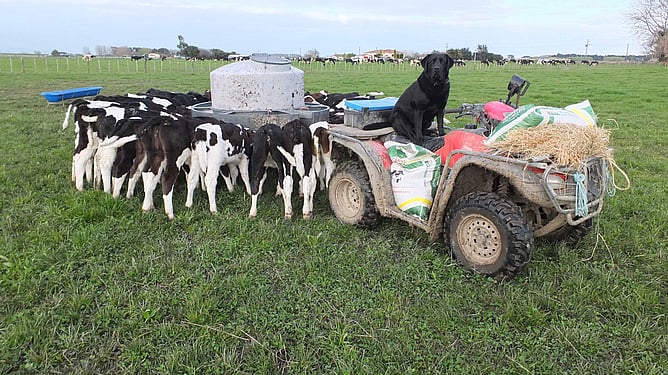
With calf and lamb rearing on the horizon, it’s especially important to be mindful of any livestock feeds containing coccidiostats, which can pose significant health risks when inadvertently consumed by companion animals such as dogs, cats and horses.
Ionophore coccidiostats are a class of compounds commonly used in livestock feeds, particularly calf rearing meals, to improve growth rates and prevent certain diseases such as coccidiosis.
Dogs are particularly susceptible to ionophore toxicity because their bodies lack the special digestive systems and metabolic pathways that help ruminants break down and detoxify these compounds. As a result, even small amounts of ionophores can cause severe, and sometimes fatal, health effects in dogs, including muscle and heart damage, neurological symptoms, and respiratory distress.
Symptoms of ionophore toxicity in dogs:
Acute vomiting and loss of appetite, often within hours of exposure.
Musculoskeletal weakness, lethargy, and difficulty walking.
Muscle tremors and twitching, progressing to ataxia (unsteadiness), stiffness or paresis (partial paralysis).
Rapid or irregular heart rate, which may cause collapse.
Respiratory distress, including panting and difficulty breathing.
In severe cases, sudden death due to heart or respiratory failure.
If ionophore toxicity is suspected in a dog, immediate veterinary attention is critical. Treatment protocols usually begin with decontamination, such as inducing vomiting or administering activated charcoal. Supportive care may include intravenous fluids, muscle relaxants, medications to support heart function, and supplemental oxygen.
Clinical pathology diagnostic tests would be conducted on blood and urine looking for any enzyme and chemistry changes consistent with ionophore toxicity. Fluid therapy and symptomatic management are often necessary for several days.
The prognosis for a dog would depend on the amount ingested and how quickly treatment is initiated.
Watch your chickens (and eggs) too!
Free range chickens are also at risk of ionophore toxicity – take every precaution to prevent poultry from accessing livestock feeds or eating spilled feed intended for cattle or sheep. Plus, when hens consume feed containing these compounds, residues can accumulate in their eggs, presenting a food safety concern for humans who eat those eggs as well. Always only use feed that is clearly labelled as suitable for laying hens.