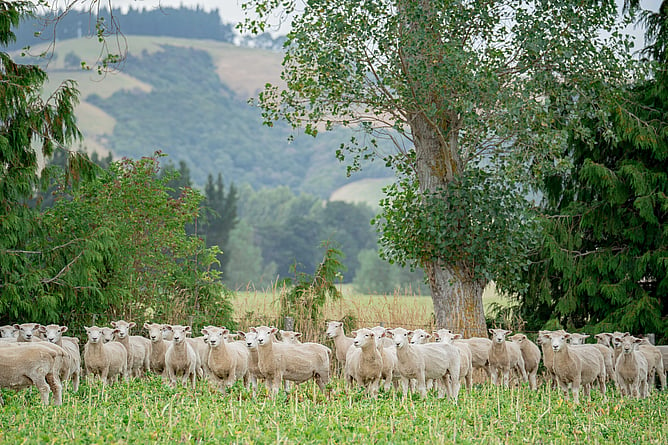
Image credit: Natwick
We compared faecal egg counts from lambs grazing permanent pasture versus those grazing kale and clover...
We’ve seen plenty of lamb fattening crops planted across Southland this season, often driven by the need for ‘cleaner’ feed with lower parasite contamination, increased feed value and a desire for better lamb yields. For some farms, they’ve also been used to help lift ewe performance.
Below are three sets of 10 individual faecal egg count (FEC) results. They are from lambs that have been grazing crop (kale and clover) or permanent pasture. These samples were taken 27-30 days after their previous drench.
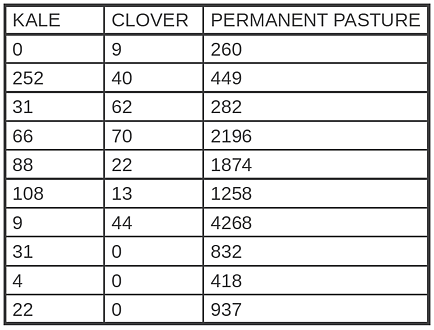
You can see the lambs grazing kale or clover crops picked up very little parasite burden over the month, compared to the lambs on grass.
Of course, results will vary between farms and there is no guarantee that you would see the same results. A lot depends on how much grass is present in the crop paddock and the management around transitioning lambs onto crop. For lambs on pasture, parasite contamination levels, grazing residuals, growth rates, and genetic susceptibility to worms all play a part.
The level of grass contamination in these pasture-grazed lambs is significant and raises questions about future grazing management. Could this paddock instead be used for adult stock or cattle to help break the parasite cycle? It’s also important to remember although these samples were taken in February, these parasite larvae will still pose a risk to weaned lambs later in the season. Avoid this paddock with weaned lambs.
As you start thinking about next season, it’s worth considering whether summer crops might fit into your system. Alternatively, does it make more sense to sell lambs earlier or at lighter weights to avoid carrying large numbers of lambs on pasture through autumn?
We would love to sit down with you to review your lamb season and see where there are opportunities to reduce parasite pressure on your farm.