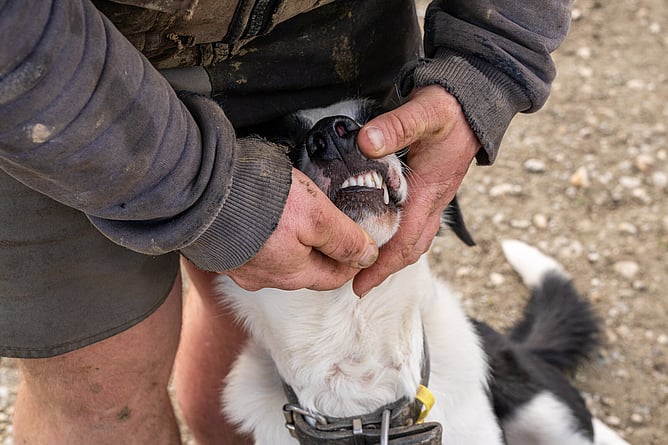
Dental disease can quietly build up in the background and seriously affect the comfort and performance of working dogs.
These hard-working animals will often appear ‘normal’ despite having advanced disease processes.
Working dogs are at risk of damage to the teeth, whether it be from working with livestock, vehicle accidents, or just wear and tear from gnawing bones and other chewing behaviours. Some of the most common injuries we see are excessive wear of the teeth from chewing, and ‘slab fractures’, where part of a large part of the back tooth breaks away.
A tooth root abscess can form when the sensitive tissue inside a tooth is exposed and becomes contaminated with bacteria. From here, the bacteria can spread into the soft tissue surrounding the tooth socket, the jawbone and the bloodstream.
Once in the bloodstream, bacteria can travel all over the body, creating infection/abscesses/ disease, e.g. organ damage, endocarditis (heart valves), septic arthritis (joint surfaces), and urinary tract infections (prostate and bladder).
Common signs of dental disease include:
Weight loss
Bad breath
Chewing on one side of the mouth
Dropping food when eating
Rubbing at their face
Showing reluctance to eat hard food.
A conscious dental assessment with a veterinary nurse or veterinarian will give an indication of the level of dental disease your dog may be suffering.
The full extent of the problem will not be known until a comprehensive examination has been completed under general anaesthetic.
During this procedure, each tooth is assessed individually and radiographs taken if there is any cause for concern. Appropriate treatment can then be implemented to correct the problem or disease.
To avoid dental disease in your working dogs, avoid feeding very hard cannon bones, regularly check your dog’s mouth – especially the back teeth – and talk to your vet if something doesn’t seem right.
A 2020 New Zealand working farm dog study showed 35% of all dogs examined had oral cavity issues, with worn and broken teeth topping the list!
TeamMate: a longitudinal study of New Zealand working farm dogs.