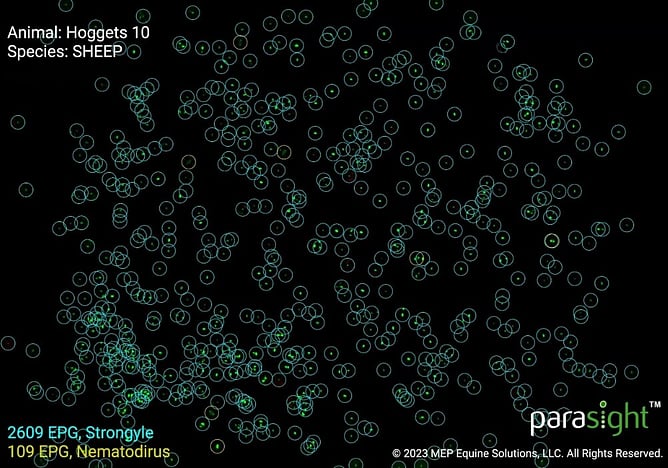
Looking over this season’s faecal egg count (FEC) results, it is fair to say we have seen it all!
Some samples coming through from drench checks have been very good, but only a handful. The majority are showing some leakage, through to high egg counts after drenching. This means looking at the drenching procedure, checking drench guns and further investigation on drench effectiveness.
We’re also seeing a wide range in 28-day FECs. Some lambs on crop still need drenching, while others don’t. Meanwhile, those on permanent pasture are also showing a mixed bag of results. It’s great to see some farmers are seeing fewer parasites as they have adjusted their grazing management.
One farmer brought in samples from ’big’ lambs and ‘small’ lambs, 28 days after drenching. The ‘big’ lambs had about half the FEC that the ‘small’ ones did, despite having been treated the same throughout the season. This highlights the importance of having ewes in good condition to enable them to wean great lambs that grow fast.
What are your wee lambs costing you in terms of feed requirement and pasture parasite contamination?
We have had a few farmers carrying out repeat two-tooth FECs leading into mating to help assess pasture contamination.
The main message is we need to keep monitoring to know what is really going on – guessing doesn’t work!