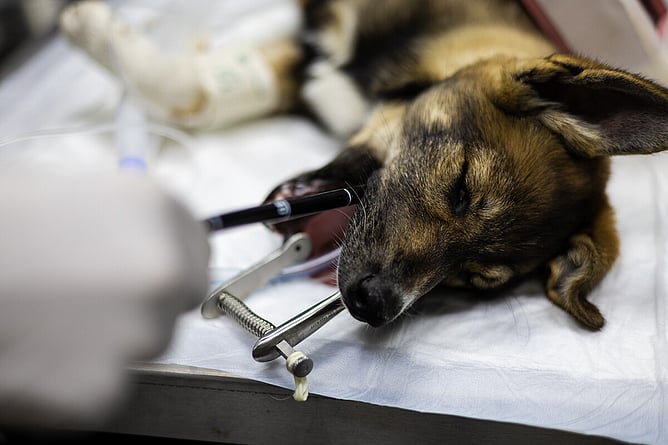
Sometimes, understanding what’s happening inside your pet means seeing it directly. Videoscopy (also known as endoscopy) allows our vets to do exactly that, without the need for invasive surgery.
Using a thin, flexible tube with a high-definition camera on the end, videoscopy lets us look inside areas such as the stomach, airways, nasal passages, and bowel. The live images appear on a screen in real time, helping us diagnose problems accurately while minimising discomfort for your pet.
Because videoscopy avoids large surgical incisions, it often means less pain, faster recovery, and a gentler experience overall.
How videoscopy helps your pets
Videoscopy may be used to investigate symptoms such as persistent vomiting or diarrhoea, chronic coughing or breathing difficulties, nasal discharge, straining to urinate, or unexplained gastrointestinal issues.
Depending on your pet’s needs, we may use videoscopy to examine:
The stomach and upper intestine (gastroscopy).
The colon (colonoscopy).
The airways (bronchoscopy).
The nasal passages (rhinoscopy).
Videoscopy is a commonly used diagnostic tool in veterinary care, particularly when your dog or cat shows mysterious or chronic symptoms that don't clear up with medication.
Why your vet may recommend videoscopy
Minimally invasive care: Videoscopy avoids large surgical cuts, reducing tissue trauma and helping pets recover more quickly and comfortably.
Clear, accurate diagnosis: High-definition, magnified images allow our vets to identify inflammation, ulcers, foreign objects, tumours, or abnormalities that may not show up on X-rays or ultrasound alone.
Shorter anaesthesia time: Because the procedure is streamlined and non-surgical, pets typically spend less time under anaesthetic compared with exploratory surgery.
Targeted sampling without major surgery: Videoscopy allows us to take small tissue samples (biopsies) or fluid samples to aid diagnosis, often avoiding the need for more invasive procedures.
Less stress, quicker recovery: Most pets recover faster after videoscopy than they would after traditional surgery, meaning less disruption for both pets and owners.
What to expect during the procedure
Videoscopy is performed under general anaesthesia so your pet remains still, comfortable, and pain-free. The scope is gently guided into the area being examined, and images are viewed live on a screen by the vet.
Because the procedure is minimally invasive, many pets are able to go home the same day, depending on the findings and any additional treatment needed.
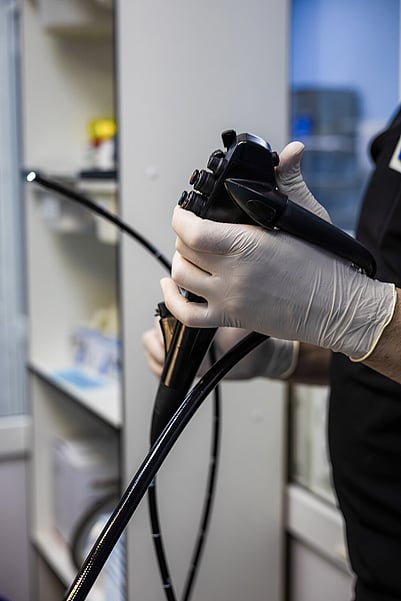
A vet preparing an endoscope for a medical procedure.
Are there limitations?
While videoscopy is a powerful diagnostic tool, it isn’t suitable for every situation.
It allows us to see the inner surface of organs, but not deeper layers.
Biopsy samples are small and may not detect disease that lies deeper in the tissue.
It cannot assess how organs move or function over time.
Some areas of the gastrointestinal tract may be difficult to reach, depending on your pet’s size.
Larger masses, obstructions, or perforations still require surgery.
As with any procedure involving anaesthesia, there are small risks, which your vet will discuss with you beforehand. In some cases, further imaging such as CT, MRI, or surgery may still be needed.
Clear answers, gentler care
Videoscopy offers a safer, less invasive way to reach a diagnosis for our furry friends while reducing recovery time and stress. By avoiding unnecessary surgery wherever possible, it helps us focus on what matters most – your pet’s comfort, wellbeing, and long-term health.
If you have any questions or concerns about needing a video scope or other imaging for your pet, talk to our team. We’re always happy to explain the options and what’s best for your pet.