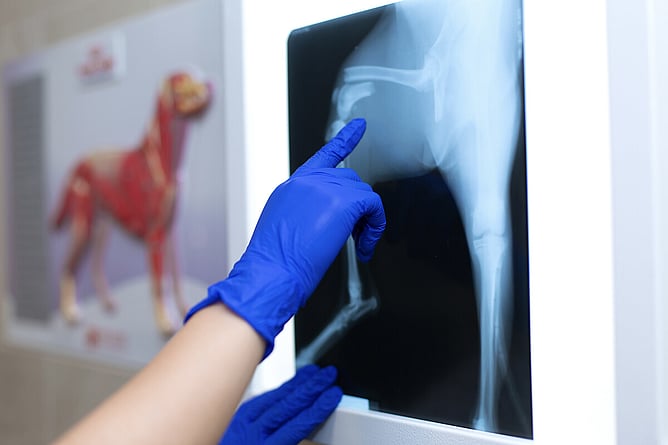
When your dog or cat isn’t quite themselves, the answers aren’t always obvious on the outside. That’s where X-rays come in.
X-rays are a fast, non-invasive way for our vets to look inside your pet’s body and understand what might be causing pain, illness, or changes in behaviour. They’re commonly used to investigate things like internal injuries, tumours, fractures, dental disease, and swallowed foreign objects - especially when time matters.
Because many problems can’t be seen or felt during a physical exam alone, X-rays help us get clearer answers sooner, so we can make the right decisions for your pet’s care.
Why X-rays matter for your pet
Earlier answers, less guesswork: X-rays reveal health issues such as tumour growth, organ enlargement, or joint problems before they become visible on physical examination. Catching problems early often means simpler treatment and better outcomes.
Quick help in emergencies: If your pet has been in an accident or swallowed something they shouldn’t have (think socks, toys or stones!), X-rays give us instant information so we can act fast.
A calm, non-invasive way to look inside: X-rays allow us to look inside an animal's body (lungs, heart, abdomen) without surgery. For your pet, that means minimal discomfort and less stress.
Monitoring ongoing conditions: For pets with arthritis, heart disease, or long-term conditions, X-rays help us track changes over time such as disease progression or fracture healing, and check that treatments are working as intended.
Dental problems you can’t see: Many dental issues in pets occur below the gum line, where they’re invisible to the naked eye. Dental X-rays help us detect painful tooth root infections, bone loss, and hidden damage that could otherwise go unnoticed.
In-house X-rays help our vets see clearly and make informed decisions quickly.
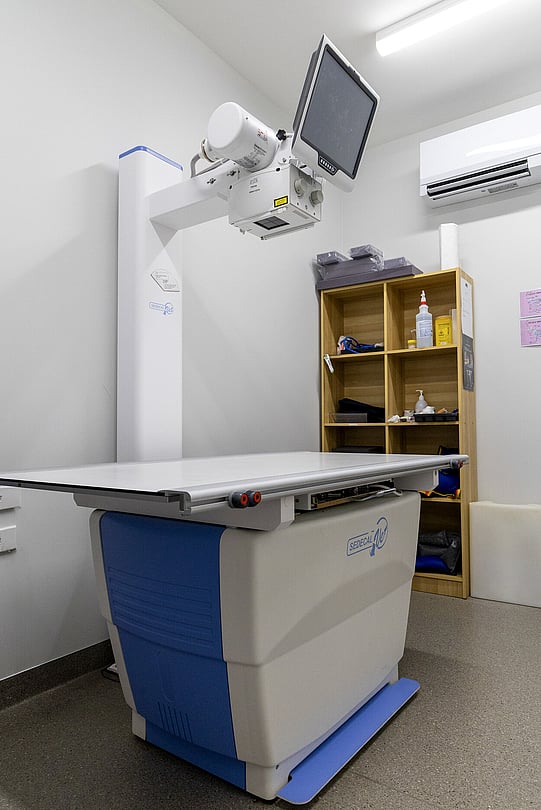
Digital X-rays: Fast, clear and safer
Most of our clinics use digital X-ray technology, which provides clearer images almost instantly. This means:
Quicker diagnoses.
Reduced radiation exposure for your pet.
The ability to share images with specialists if needed, helping guide treatment decisions.
Are there any limitations?
Like any diagnostic tool, X-rays aren’t perfect, and we’re always upfront about that.
Soft tissues can be harder to distinguish: X-rays show differences in tissue density. Bones appear clearly, but soft organs such as the liver and spleen can blend together, making some conditions harder to identify. When we need a closer look at soft tissue detail, we can use other imaging methods, such as ultrasound, to get clearer answers.
They capture a single moment in time: An X-ray is like a photograph; it doesn’t capture movement or the function of the area, e.g. intestinal movement. In some cases, we may take a series of images or use 'dyes' to gather more information.
Your pet may need sedation: Our patients rarely stay still long enough for clear images. Sedation or anaesthesia helps keep them calm and comfortable, reduces stress, and allows us to get the best possible diagnostic result.
Sometimes more imaging is needed: If X-rays don’t give us enough detail, your vet may recommend further imaging such as ultrasound, endoscopy, CT, or MRI to fully understand what’s going on.
Clear answers, informed care
X-rays are a safe, effective and incredibly valuable tool in veterinary care. They help us diagnose problems sooner, avoid unnecessary procedures, and make informed decisions that improve your pet’s comfort, quality of life, and long-term health.
If you have any questions or concerns about needing an X-Ray or other imaging for your pet, please talk to us. We're always happy to help.