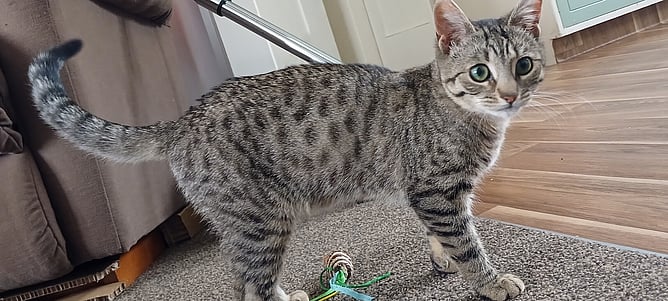
Tina today - healthy and thriving after treatment.
When Tina, a tiny 12-week old kitten, came into our Balclutha clinic for her vaccinations, her owners mentioned that she wasn’t quite thriving. She had a poor appetite, wasn’t grooming herself, and didn’t seem like a typical lively kitten.
During her examination, the vet noticed a few unusual signs. Tina was unusually subdued, and her body shape wasn’t quite right for her age. Her legs were shorter than expected, and her head was broader than normal.
The vet was concerned that Tina might have a congenital condition, meaning something she was born with. With assistance from a local pathologist, the vet suspected congenital hypothyroidism – a rare condition in cats where the thyroid gland does not produce enough thyroid hormone.
Note: Not to be confused with feline hyperthyrodism - a secretion of excess thyroid hormone common in older cats.
What is congenital hypothyroidism?
Thyroid hormone plays a vital role in growth, brain development, metabolism and overall energy levels. Kittens affected by congenital hypothyroidism often appear normal at birth, but problems usually become noticeable by around 6–8 weeks of age as growth and development begin to lag.
Affected kittens may develop:
slower growth rates.
shorter limbs with a broader head.
lethargy or mental dullness.
constipation.
feeling cold.
poor coat quality or dental issues.
Getting answers
A blood sample was collected from Tina in clinic and sent to the laboratory. The results confirmed the suspicion - Tina had less than 25% of the thyroid hormone she should have had.
While this diagnosis can sound worrying, there was good news.
Treatment - and a positive outcome
Congenital hypothyroidism can be treated with a daily thyroid hormone supplement, which replaces what the body is unable to produce on its own. This hormone is essential to nearly every cell in the body, supporting normal metabolism, growth and mental development.
Tina was started on treatment straight away.
Four months later, the change was striking. Tina has more than doubled her size, was eating well, grooming herself, and behaving like a normal, playful kitten. She still has slightly shorter legs and a broader head - changes that may not fully resolve because treatment began after an important stage of growth - but her overall health and quality of life have improved significantly.
Tina will need thyroid hormone supplementation for the rest of her life, but with ongoing care, she has the potential to live a long and healthy one.
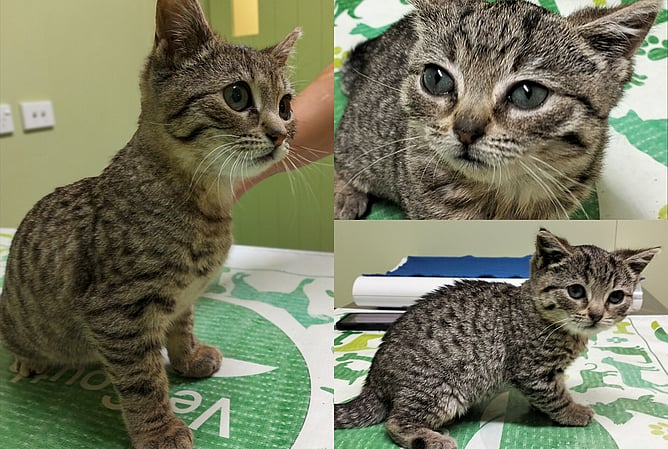
Tina before treatment - showing the effects of congenital hypothyroidism.
What cat owners should know
Congenital hypothyroidism in kittens is rare, but early diagnosis is crucial. While many clinical signs improve with treatment, musculoskeletal and neurological changes may persist if therapy is delayed.
If your kitten seems unusually lethargic, isn’t growing as expected, or just doesn’t seem quite right, an examination - and, if needed, a blood test - can make all the difference.
The sooner this condition is diagnosed, the better the outcome.
If you have concerns about your kitten’s growth or behaviour, book an appointment with your VetSouth team - we’re here to help.