As our canine companions get older, we want to do everything we can to keep them happy and healthy for as long as possible.
In general, the most common health issues older dogs develop are hearing and vision loss, dental disease, dementia, cancer, heart problems, kidney issues, obesity, gastrointestinal issues, incontinence, and joint problems such as arthritis.
Typically, dogs will begin to show visible age-related changes at about 7-12 years of age, depending on their size and breed. Even if they show no apparent signs, they may be experiencing age-related deterioration, which a vet can catch early and help alleviate.
Bringing your pet in for a senior dog health check may help to catch any developing issues early. It is a simple, non-invasive process that the pet mainly sees as a fun one-on-one with a friendly human in a blue uniform.
The steps of a senior dog health check
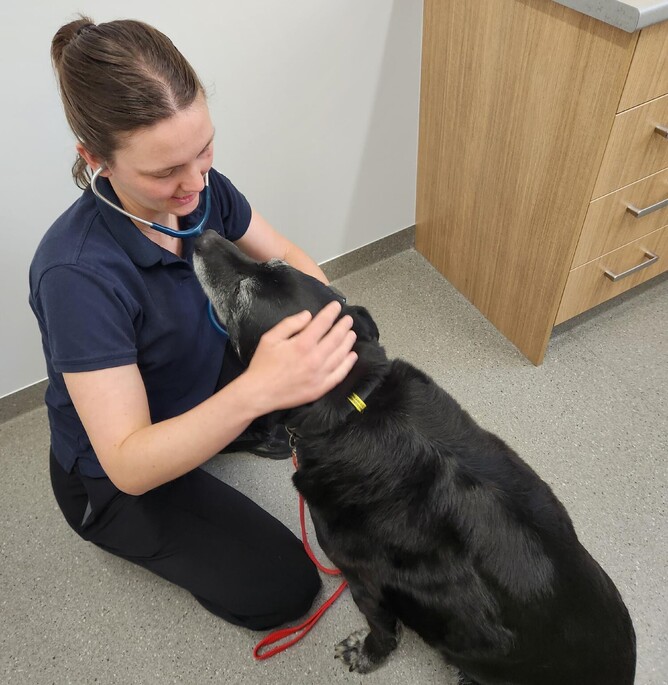
Twelve year old Dumper is a labrador/huntaway cross, who enjoyed his recent senior dog health check with VetSouth small animal vet, Elin Clapton.
Step 1
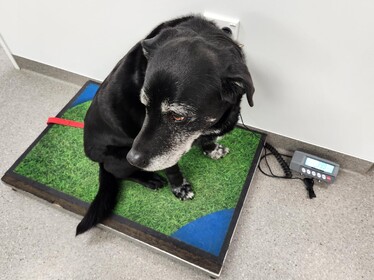
Dumper sat politely on the scales in the waiting room to be weighed, and this weight was kept on his file for future reference.
Step 2
Dumper went through to the consult room and met Elin. She introduced herself to him so he would relax and feel she was his new best friend.
Step 3
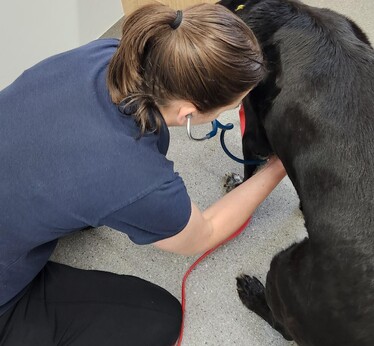
Elin used a stethoscope to listen to Dumper’s heart to make sure it was beating regularly and at an appropriate speed, and to check for any extra sounds that may suggest anything was amiss. His lungs were also checked to ensure airflow was clear and audible.
Step 4
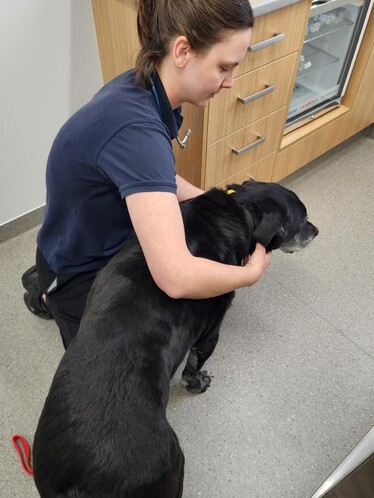
Dumper’s eyes and ears were checked under the guise of some head pats and cuddles. Elin checked his ears for any signs of redness or discharge, which may suggest infection. His eyes were checked to ensure they were symmetrical, to assess any colour changes, and to look for anything else of concern.
Step 5
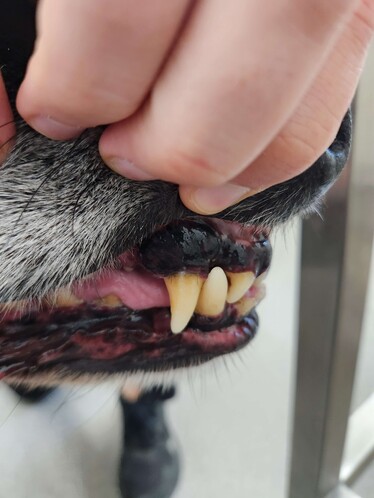
His teeth were examined for tartar buildup, fractures, and root exposure or gum recession that could be causing oral pain.
Step 6
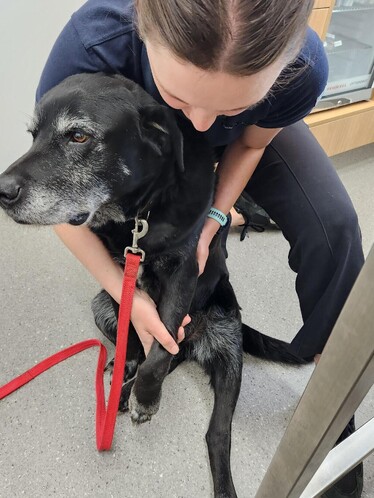
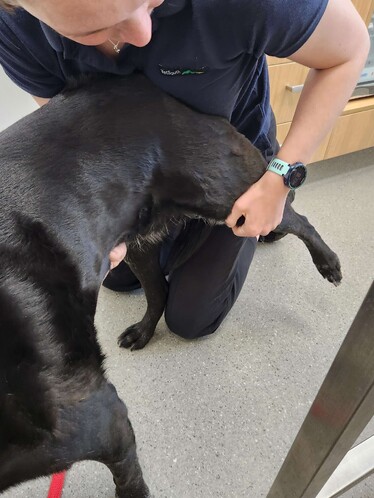
The joints in Dumper’s legs were carefully checked to ensure they had a good range of movement, and to look for any pain when flexing and extending them. Elin assessed whether both legs felt symmetrical and whether there was any crepitus (crunching) when moving the joints.
Step 7
Elin also performed an abdominal palpation to assess organ size and check for any lumps or other findings that should not be there. She was also looking to see if there was any pain during the palpation.
Step 8
She checked Dumper over for any other lumps. Older dogs often develop random lumps, and he had two or three that needed to be looked at. Elin recommended a fine-needle aspiration to determine whether the lumps were masses that might cause concern. This is a simple process where a small sample is taken from the lump and quickly tested by the vet.
Step 9
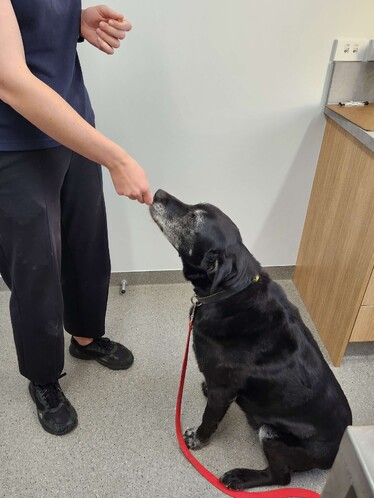
At the end of the check, Elin confirmed Dumper’s opinion that she was a great vet by giving him treats to reward his cooperation. These were very well received.
Step 10
All in all, Dumper’s senior dog check was a success. The random lumps were nothing to be concerned about and were just fatty deposits.
He showed early arthritic changes in his elbow and a slight reduction in hip range of motion. He was slightly stiffer on the right side than on the left.
Elin also felt he was slightly overweight.
So, Dumper left VetSouth with a plan to feed a high-quality dog food formulated for senior dogs to support his joints and keep them comfortable. He will also be on a diet to lose excess weight, which will improve his joint health.